“Education is a natural process carried out by the child and is not acquired by listening to words but by experiences in the environment.” ~Maria Montessori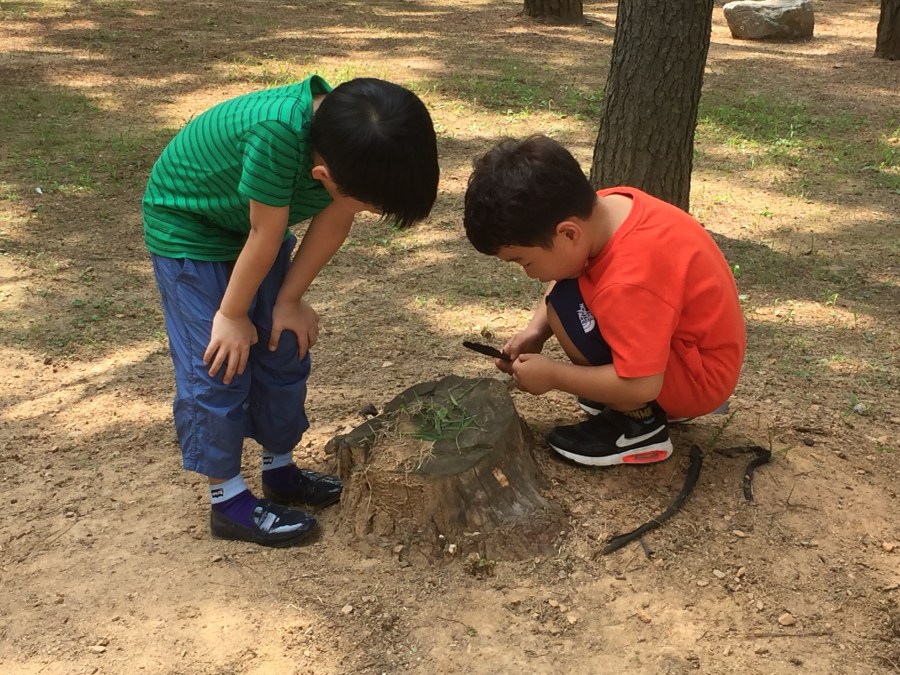
As an early years teacher, I strive to provide an enticing environment with exciting provocations for my students. I hope to create a classroom that welcomes and inspires. I use a play-based approach to teaching. Within play students engage, ask questions, discover, think, build and create just to name a few. Play-based learning helps the teacher see the process rather than just the product. As Loris Malaguzzi explains, “The child wants to be observed in action. She wants the teacher to see the process of her work, rather than the product. The teacher asks the child to take a bucket of water from one place to the other. It’s not important to the child that the teacher only sees him arrive with the bucket of water at the end. What is important to the child is that the teacher sees the child while the child is working, while the child is putting out the effort to accomplish the task.”
Another important area of a child’s education is their family. I work to establish a good connection between school and home. These are two big influences in a young child’s life and connecting them helps to reinforce the learning from both environments. An intricate part of this connection is documentation. In order for family members to see what happens at school, the teacher must be able to provide anecdotal notes, pictures or video representation. I believe it is important to share the process of learning with families and with the greater community through putting documentation up in the classroom. Not only is this a great way to make learning visual, it also helps students revisit their own learning.
I have had an amazing opportunity to visit Reggio Emilia. That experience changed how I think about students and how I see my classroom. I have come to understand young children as competent and see the classroom as the third teacher. In the early years of education students come ready to learn. They are naturally curious and want answers to the many questions swirling in their brains. When a teacher provides an environment rich with materials for children to try, do and play with, the student is able to begin answering some of their own questions.
 Ginger Puffer